
Hiding in Plain Sight:
The Life of Katherine Mansfield

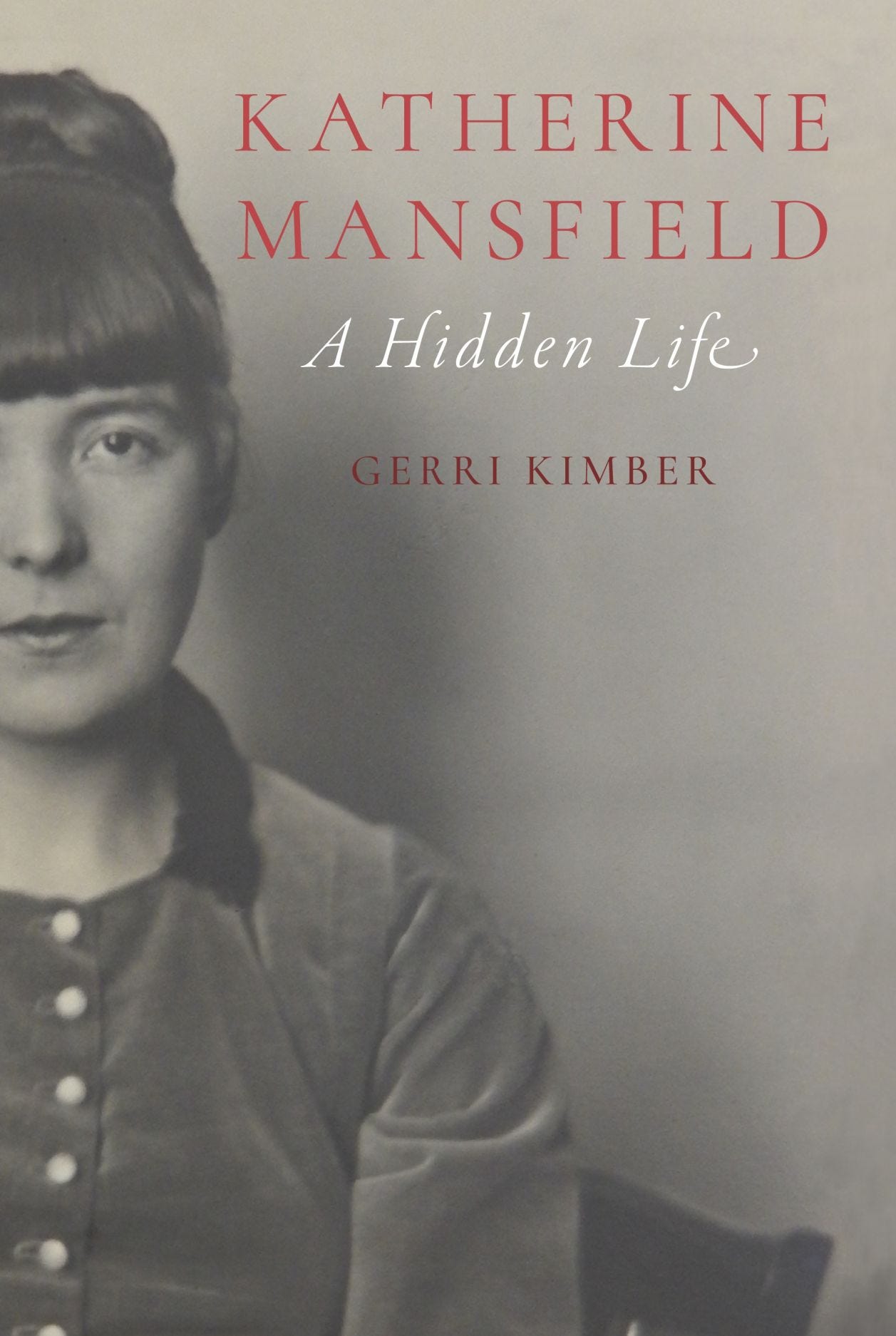
Reaktion Books / University of Chicago Press
“Books are the mirrors of the soul. If you do not tell the truth about yourself, you cannot tell the truth about other people.”
Virginia Woolf
“I think the only way to live as a writer is to draw upon one’s familiar real life, to find the treasure in that.”
Katherine Mansfield
I will readily admit that I was woefully late in coming to the rather obvious awareness that writers such as Woolf and Mansfield were remarkably experimental in the manner and mode with which they assumed an ascendency among the most prominent and important members of the literary modernist canon of the 20th Century. I suppose I fell under the sway of louder modernists (for lack of a better word) such as rabble-rousers like James Joyce and Wyndham Lewis. But Woolf, and especially Mansfield, were far more quiet modernists, though they shook up the stylistic status quo with equal fervour and daring aplomb. Of course, it didn’t help her status that Mansfield concentrated almost exclusively on the short story as her chosen writing format; and it also didn’t help that she died painfully young of tuberculosis, at 34 in 1923, just as modernism itself was building up its full head of steam. So I’m delighted to report that Gerri Kimber’s new biography of Katherine Mansfield, called A Hidden Life, released by Reaktion Books and University of Chicago Press, manages to correct an abundance of gaps in our appreciation of just who she was and what she accomplished in her sad but turbulent life.
Kimber, the Visiting Professor in the Department of English at the University of Northampton (and who was also the president of the Katherine Mansfield Society for ten years) is the ideal candidate to set the record straight regarding this renegade writer, whose personal life, lived as large and fast as her fiction was intimate and slow, contained many of the germs and impetus than informed her quiet narrative art. I have no hesitation in declaiming that her biography of the New Zealand-born storyteller showed me the error of my ways when it comes to assessing the proper ranking of any literary modernist hierarchy. Certainly D.H. Lawrence, another luminary in the realm of groundbreaking tales, was well able to discern her importance to any modern movement aiming to transform the way stories unfold. And he partially addressed her looming and impactful social presence by basing the characters of Gudrun and Gerald in his novel Women in Love on the real Mansfield and one of her temporary but influential husbands, John Middleton Murry. I refer to the erotic subtext of her life as hiding in plain sight, partly because that was how she lived and partly to open a passageway into Kimber’s alluring biographical notion of her actual hidden life.
One of my reasons for aligning the two women writers, born only six years apart, in so parallel a way with those opening quotation epigrams is that they both shared a simpatico approach to turning one’s own private life into the creative machinery of their narrative fiction. The necessity of telling the truth about yourself being the only valid way of telling the truth of other people, as well as living truly as a writer only by drawing on your own familiar real life, both those sensibilities are at the heart of these two hyper-subjective authors. And yet there was always a degree of hiding out behind a persona in both as well, partly because of their unconventional (at the time) personal intimate lifestyles, partly because they both literally used the private lives of all those around them in a literary fashion for their works, and to some degree were both living in a theatrical capacity so they could more easily get by on the really straight stage of daily life. Kimber gets right down to business at the outset by establishing Mansfield as a person who wore a variety of masks in order to both survive and achieve her objectives. She was born Kathleen Mansfield Beauchamp in Wellington NZ, but came into her own as Katherine Mansfield in the hubub of Bloomsbury adjacent London.
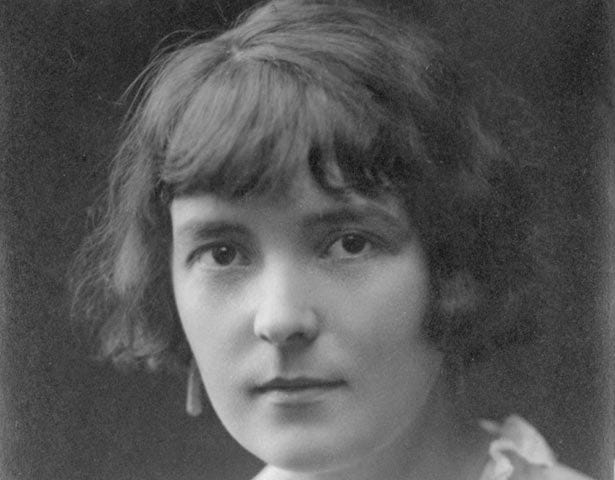
Lytton Strachey, the maven and potentate of the Bloomsbury Group, wrote to his soulmate Virginia Woolf about meeting Mansfield in 1916 and sharing Katherine’s fondness for Virginia’s The Voyage Out, likely as a means of arranging a meeting. Kimber points out that Mansfield was already practicing her art of dissembling and pretending, “while deciding which of these new acquaintances would be worth cultivating. Strachey’s portrait of Mansfield as amusing, mysterious and sharp is perceptively accurate. The essence of Mansfield is encapsulated: the fabricator, dissembler and born entertainer.” Meanwhile, Virginia’s long suffering husband Leonard recalled Mansfield this way: “By nature I think, she was gay, cynical, amoral, ribald, witty. She was extraordinarily amusing. Her gifts were those of an intense realist, with a superb sense of ironic humour and a fundamental cynicism.” For Binder as a point of departure, Mansfield’s character as a biographical subject was very attractive, quite apart from her skills as a storyteller:
“A feisty, charismatic, highly intelligent young woman who lived life to the full, who, as we shall see, experimented with all sorts of ways of living and who paid bitterly for her mistakes later in life. Katherine Mansfield is that rare thing—a writer exclusively associated with the short story. Her themes incorporate violence, war, death, childbirth and relationships—especially in marriage—together with feminist and sexual issues. The development of her own particular free indirect discourse form of writing culminated in her position as an early exponent of the modernist story.” And this last aspect was the key stylistic strategy which made me regret taking so long in realizing how extremely experimental she was, and for that matter just how radical the writing of Woolf, her mentor of sorts, actually was. They were both practitioners of indirect discourse, eventually even arriving at a stream of consciousness narrative technique with malleable interplays between not only the characters but also the authors themselves (one which now feels like an obvious precursor to Joyce’s own more commonly admired structural formats).
Binder’s extolling the virtues of this radical technique also had the benefit, for me at least, of suddenly clarifying what made the much earlier writing of Jane Austen equally experimental, a salient fact that had never occurred to me, despite my recognizing it easily in certain male authors such as Miguel Cervantes and Laurence Sterne. The biographer clarifies this very well: “In free indirect discourse, we are never told which thoughts belong to which character: instead the narrative moves between a more conventional narrator and a character’s conscious thoughts. The result is an intimate method of storytelling, where, for certain moments, we become the character on the page. This use of free indirect discourse would become the hallmark of Mansfield’s narrative technique, together with the episodic nature of certain stories and their theatrical qualities.” Mansfield was once asked about one of her most famous stories, “Prelude”, what form did it take? “As far as I know,” Mansfield responded, “It is more or less my own invention.” Later on, she would characterize many of her stories as the Prelude method: “It just opens and unfolds”. Equally illuminating is Binder’s emphasis on Mansfield’s fascination with the then-new medium of the cinema:
“Her narrative art reflects this interest in the deliberate cinematic impression of so many of the stories: it is as if the narrator has a moving camera, panning across, and then focusing in on something that provides many of the stories with their unique pictorial quality.” Indeed, in the last weeks of her short life, Mansfield spoke about having actually been a camera herself all along, “I’ve been a selective camera, but now I want to widen the scope of my camera.” I found this a deeply insightful observation, and in fact it reminded me of how Jane Austen, without my ever fully appreciating this fact before, also used a similar strategy: focusing on the inner life of her characters, with a interest in experimenting with formal techniques and structures, as well as her well known and highly regarded interest in the complexities of human experiences and depths of feeling, whether expressed or not outwardly. I found the ideas explored in a Newsletter called Jane Austen’s House to be very informative and helpful in coming to appreciate Mansfield’s shared usage of this style. In it, the editors point out that Austen’s novels, like Mansfield’s stories, “are told in the third person by an omniscient narrator who has access to the thoughts and feelings of the characters. She makes use of minimal description and instead focuses on the speech and actions of her characters. Much of her work reads like a playscript.” Substitute screenplay for this format and you have an accidental insight into Mansfield’s similar gifts.
Both Austen and Mansfield (and Woolf for that matter) made extensive use of what Binder has called the ‘free indirect discourse’ style, in which the narrator’s authorial voice appears to even take on properties of the character’s voice, sometimes to the extent that the reader is often not quite sure who is in possession of either the thoughts or the words. As the Austen Society points out: “Jane Austen didn’t invent this writing style (author’s note: unless I’m mistaken it was both Cervantes and Sterne who did so) however she was one of the first writers to use it consistently throughout her work. Today, she is regarded as one of the pioneers of the style, anticipating writers such as Virginia Woolf and James Joyce, who extended the use of this style of writing in major novels of the Twentieth Century.” And then, there are the brilliant crystals of Mansfield’s collected stories, which exhibit a similar experimental approach: sharing with us the thoughts or feelings of the characters, without telling us that this is what they are doing, almost becoming, for a moment or two, the character rather than the narrator. Again, the Austen Society explains this phenomenon in a way that suddenly sheds light on the radical delivery of many of Mansfield’s deceptively simple storylines: “Importantly, the speech or thought is not attributed to the character (with a ‘she thought’ or ‘he imagined’) so the reader must pick up on clues in the text to understand that these are the thoughts of the character, not the narrator.”
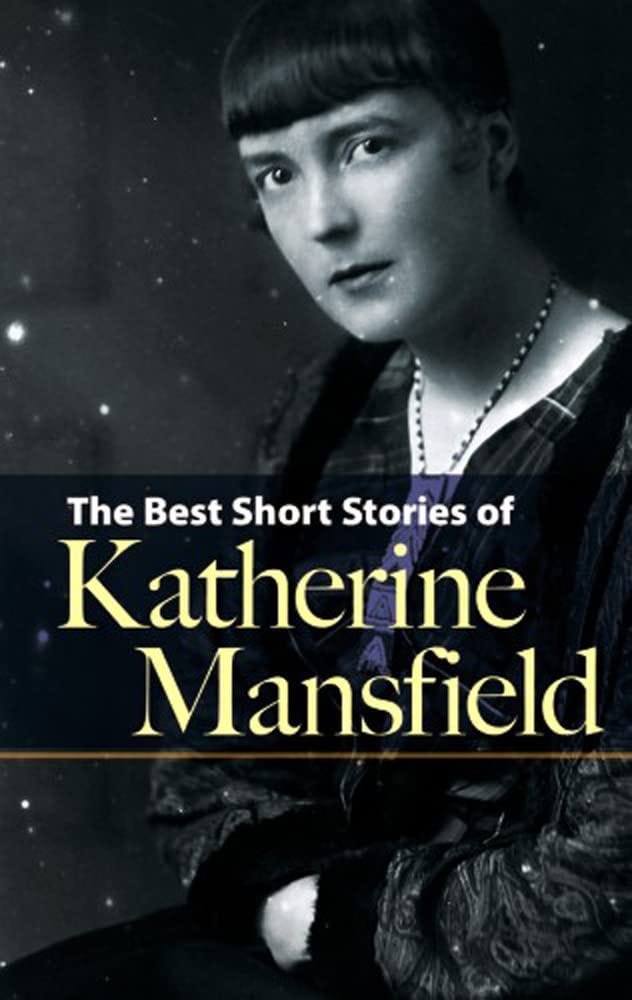
I was, quite frankly, stunned by this creative overlap between the supposedly classical and the supposedly modernist sensibilities, as well as by how daring Mansfield actually was in the way she ‘opened and unfolded’ her tales. And because her personal and professional lives were actually one life seamlessly shared, it seems doubly fitting for Binder’s detailed chronological chronicle to focus our attention on just how intimately Mansfield was opening herself up to our belated scrutiny, especially given her paradoxical mix of grandiose performance and nearly static shyness. Mansfield’s divulgence of personal dilemmas writ large is evident in the way she characterizes her own interests as a writer: “Always my thoughts and feelings go back to New Zealand, rediscovering it, re-living it. Our secret life, the life we return to over and over again, the ‘do you remember’ life, is always the past. And the curious thing is that if we describe this which seems so intensely personal, other people take it to themselves and understand it as if it were there own.” Never have I heard such as accurate assessment of what makes literature resonsate within us as readers, strangers who are unknown to the author. This detail also reminds us that the best way to appreciate a biography of a famously unfamous writer is to first read a few of her stories (I recommend the collection called Bliss and Other Stories, as well as a second, The Garden Party and Other Stories) as an entry into the recalcitrant cellar door of Mansfield’s psyche. “The Garden Party” in particular, my first introduction to her works, has an intriguing opening which inserts us immediately in that indirect discourse kind of unfolding at which she so excelled: “And after all, the weather was ideal”. That opening, as Binder illustrates in her introduction, leaves the reader to fill the gap, and further: “The theatrical/cinematic tone is also enhanced by their division into episodes or scenes.”
Binder points out, quite rightly, that there has been no shortage of Mansfield bios prior to her own new one, but she also quite rightly explains that “This latest one offers an important new focus, where the complicated bond between Mansfield and her husband, John Middleton Murry, is fully revealed for the first time, demonstrating how it was far from the loving relationship superficially portrayed in most of their letters, when Mansfield tended to obscure what she was actually feeling. In addition, there was another complication in their relationship—the covert, long term bond between Mansfield and the editor of New Age, A.R. Orage, which truly came to define her life—both artistic and personal—and her death.” Indeed, it was Orage, who Murry would later almost expunge from what Binder describes as her duplicitous ex-husband’s “non-stop stream of sycophantically edited books by Murry”, including five volumes of carefully censored letters. “But if any proof were needed of Orage’s significance for Mansfield,” Binder concluded, “one need only look to the last year of her life, and especially those precious few weeks spent together at George Gurdjieff’s Institute for the Harmonious Development of Man, in Fontainebleu France.” Apparently, Murry’s self-serving tending to the garden of her memory was largely intended to “wipe virtually all evidence of Orage from Mansfield’s personal life, and in that aim he was supremely successful.”
Binder has done a great service to Mansfield as a writer, and to all readers interested in understanding her unique character and lifestyle choices, indeed, her role as a major modernist figure, largely due to the fact that her new biography “is the first to draw on the most recent, fully annotated editions of her works, both fiction and non-fiction, as well as transcriptions of her letters. These nine volumes have brought to life a fresh, vibrant and more complicated Mansfield than has previously seen the light of day. In uncovering the true extent of Orage’s influence on Mansfield—and not just in 1910-1911—it will be impossible for future biographers to ignore what was possibly the most significant relationship of her life.” Apart from her humility in admitting that there will be future biographies after hers, I’m also truly impressed by Binder’s ability to explore the delicate complexities of a writing style that uses inner consciousness as a technique for revelation of character, a notion that Mansfield had already embraced early on in her life as a literary prodigy, when she lived a courageously unconventional life both in dreams and reality. She boldly stated while still a teenager: “I want to celebrate this day by beginning to write a book. In my brain, as I walk each day, as I dress, as I speak, a thousand delicate details float and are gone. I want to write a book—that is unreal yet wholly possible because out of the question—that raises in the hearts of the readers’ emotions, sensations too vivid not to take effect, which causes a thousand delicate tears, a thousand sweet chimes of laughter. I shall never attempt anything approaching the histrionic, and it must be ultra modern!” Well, she accomplished that feat in spades and in concise short stories that contain a wealth of content in economical measures.
Binder helps us understand how and why Mansfield sought for an awareness of the reading mind underneath your mind, an awareness of, and travel into, the interior world. That is the world that she invited us to occupy with her, for the short duration of reading her crisp narrative detours towards and away from the human condition. Especially the female human. We have of late learned much about the limits of the male gaze in arts and letters, with Mansfield being one the key proponents of a new refurbished female gaze. Her gaze however, unlike the male version which is obsessively focused outwards at people and things, is focused on an interior four dimensional landscape where thoughts and feelings replace objects. Between atoms, between brains: Mansfield provided us with a users manual for her private dimension, a space which cannot be measured, but without which the outside world means nothing. This secretive realm she offered in gifts such as
Bliss, in 1918, and again in Miss Brill, 1920, among her many other story gems. A passive power like hers allows the apparent to blossom. The geography of the physical world is distinct and diverse, different continents and oceans appear drastically in competition, while the geography of the imagination, which she explored with such deceptive simplicity in The Garden Party, 1922, is shared and held in common, not that anyone realizes this odd fact in daily practice.
“The mind I love must have wild places.” Katherine Mansfield once declared, and she delivered on the literary promises made while still a young girl, right up until fate took her away while still a young woman and deprived us of her wildness. Her books of stories however, like her wildness, are timeless. Gerry Kimber’s new and comprehensive chronicle of her interior and exterior life leaves her with a proper elegy while also bestowing on us all a testament to the sheer tenacity of a woman who refused to be anything other than who she really was. Her biography explores Mansfield’s firmly established place as one of literary modernism’s most significant writers, albeit in a working life cruelly abridged. On the fringes of Bloomsbury, and friends with D.H. Lawrence, Aldous Huxley, T.S. Eliot and others, she was at the heart of literary London at its most experimental. Her writing broke boundaries in such a bold manner that her literary sparring partner Virginia Woolf later admitted that Mansfield’s work was the only writing she was ever jealous of. “She was forever pursued by her dying, and had to press on through stages that should have taken years in ten minutes. She had a quality I adored and needed. I dream of her often.” High praise indeed. This new biography by Kimber makes the reasons for that praise perfectly clear.